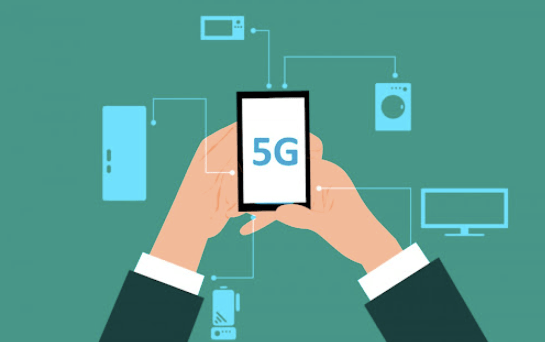
5G and 4G differ primarily in throughput, latency, and network flexibility. 5G offers higher speeds, lower latency, and greater device density, enabled by broader spectrum use and edge-enabled architectures. Real-world gains vary with deployment, spectrum, and traffic patterns, making these improvements context-dependent. The implications for reliability and scalability matter, but the practical value depends on specific use cases and infrastructure maturity, inviting a closer look at where the upgrade most effectively maps to needs.
What 5G Is and How It Differs From 4G
5G represents the next generation of mobile networks, delivering significantly higher data throughput, lower latency, and greater device density than 4G. The technology introduces a broader spectrum use and adaptive modulation, enabling scalable network configurations.
5G branding emphasizes ecosystem coherence, while chipset compatibility determines practical reach. Standards favor modular components, ensuring interoperability across devices and networks without compromising performance or security.
Speed, Latency, and Reliability: The Big Performance Gaps
The performance gaps between 5G and 4G manifest most clearly in three metrics: speed, latency, and reliability. Speed advances enable rapid data transfer, while low latency supports near-instant feedback. Reliability hinges on robust error handling and consistent connectivity. Fast switching and network slicing enable tailored performance, yet variability persists; deeper architectural optimizations remain essential for uniform, freedom-focused gains across diverse environments.
Real-World Scenarios: When Upgrading Really Makes a Difference
In real-world deployments, upgrading to 5G yields tangible benefits primarily in use cases demanding high bandwidth, low latency, and stable connectivity, such as dense urban environments, large-scale IoT deployments, and time-critical industrial applications.
The 5G urban profile enables enhanced mobile broadband and edge-assisted workflows, while 5G enterprise supports reliable remote operations, asset tracking, and synchronized manufacturing processes with stringent QoS guarantees.
How to Decide If 5G Is Worth It for You
Assessing whether upgrading to 5G is warranted involves comparing prevailing performance needs with the capabilities of 5G across deployment scenarios. The decision hinges on sustained mobility, latency, and bandwidth requirements, not mere novelty. For some, benefits justify cost; for others, interesting network myths persist.
Consider 5g battery usage and device efficiency to avoid premature obsolescence, then evaluate real-world gains.
Frequently Asked Questions
What About 5G Energy Consumption Compared to 4G?
5G energy can be higher per user in dense scenarios but offers greater spectral efficiency; overall consumption depends on traffic patterns. 4G efficiency remains competitive in modest usage. In aggregate, 5G energy, 4G efficiency, and network design shape outcomes.
Are 5G Devices More Expensive to Own Long-Term?
Yes, occasionally more expensive upfront with higher 5G cost, but long term ownership may balance due to improved efficiency, service lifetime, and depreciation. Analysts note trade-offs between initial price and ongoing costs for network compatibility.
Will 5G Work With Legacy 4G Networks Everywhere?
Yes, but with caveats: 5G deployment relies on dense infrastructure, and full 4G compatibility cannot be assumed everywhere; legacy networks persist. The transition varies by region, path, and device capability, balancing innovation with 4G compatibility.
How Does 5G Affect Battery Life in Phones?
5G can affect battery life variably; higher peak performance can improve tasks, but increased radio activity and duplex switching may raise consumption. The battery impact depends on usage, device efficiency, and network conditions, influencing overall, real-world endurance and network efficiency.
See also: Benefits of Index-Based Crypto Strategies
Is 5G Safer or More Risky for Health?
5G presents neither proven safety superiority nor clear excess risk compared to prior networks; risk perception and long term exposure remain uncertain. The analysis contrasts theoretical mechanisms with empirical data, suggesting cautious interpretation and freedom to decide individually.
Conclusion
In conclusion, the transition from 4G to 5G is less a miraculous leap and more a meticulously documented upgrade. Theoretical speeds exist, latency shrinks, and device density climbs, all within carefully engineered constraints. For those chasing ultra-responsive apps or dense IoT, 5G promises measurable gains—so long as the stars align: spectrum availability, infrastructure, and cost-benefit calculus. Until then, the tech press can crown it transformative; engineers will quantify the edge cases and call it a victory for calculated optimism.
